About
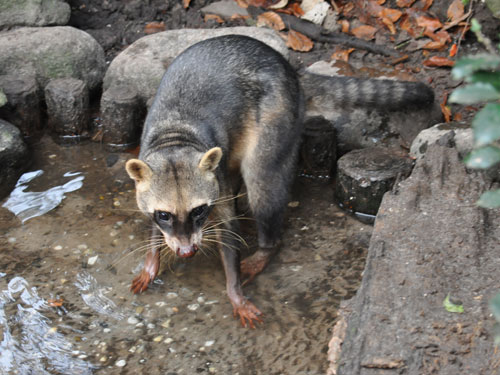
The crab-eating raccoon (Procyon cancrivorus) inhabits riverbanks and forests in Central and South America and leads a life strongly dependent on aquatic environments. It resembles the North American raccoon but is more slender with shorter fur; its forepaws are dexterous and it is often seen handling food in water. Nocturnal and generally solitary, individuals may gather at feeding sites. Omnivorous, it eats fruits, insects, crustaceans, frogs and turtles, seeds, and other items. Reproduction occurs once a year, from July to September; gestation lasts about 60–73 days, and females typically give birth to 3–4 young. Although habitat loss and hunting pressure have some impact, its wide distribution has led to a conservation status of Least Concern.