About
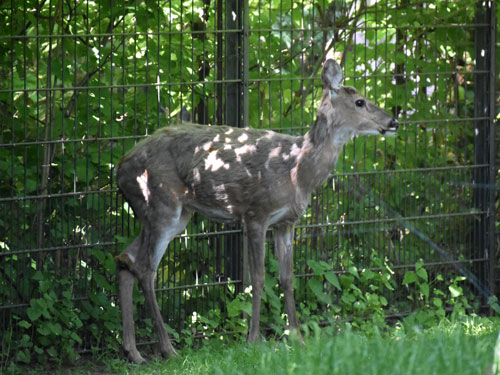
White-tailed deer. Named for the white underside of the tail, it adapts to a wide range of environments from Canada in the north to Brazil in the south, including forests, grasslands, mountains, and dry areas. It is primarily a browser that feeds on tree leaves and twigs and uses more than 100 plant species. It forages at dawn and dusk; individuals are basically solitary but may gather at feeding sites. Breeding occurs from autumn to winter, and after a gestation of about 6.5 months females give birth to young. Across its entire range the population is stable, and the IUCN assesses it as Least Concern.