About
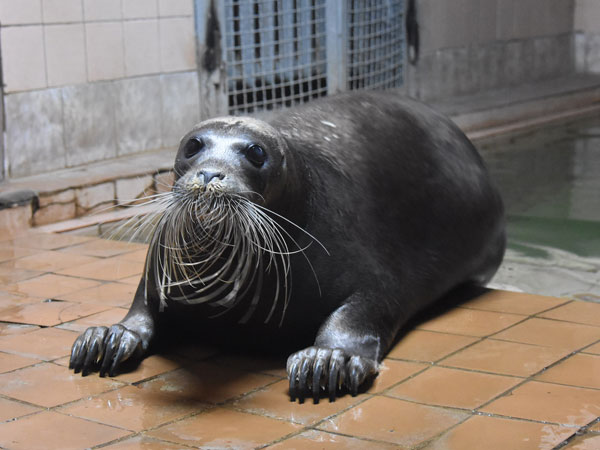
The bearded seal (Erignathus barbatus) is a large seal distributed in cold seas around the Arctic Ocean, including the Bering Sea and the Sea of Okhotsk. Its body is rounded while the head is small, and it is notable for the dense, long white whiskers around the mouth. Although its name refers to a “beard,” the whiskers are mainly on the upper lip and serve as sensory organs for locating prey on the seafloor. It prefers relatively shallow seas with drift ice, diving to the bottom to seek invertebrates such as crabs, shrimp, and shellfish and benthic fish, which it feeds on by sucking them into its mouth. It is usually solitary, and in spring females typically give birth to a single pup on the ice. Pups are born with water-repellent fur and thick subcutaneous fat, allowing them to enter the sea at an early age. During the breeding season males produce sounds that carry well underwater to announce their presence to females. Declines in sea ice due to climate change threaten its habitat and breeding environment, and it is listed as Near Threatened (NT) on the IUCN Red List.