About
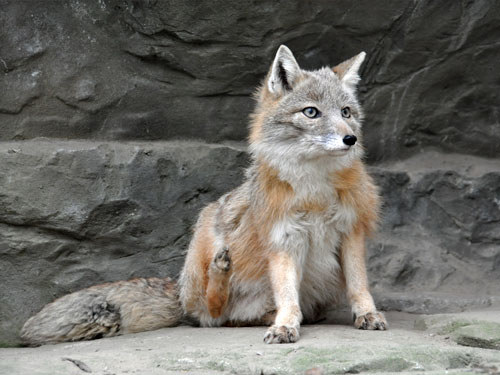
The Corsac fox inhabits dry lowlands such as steppes and semi-deserts from Central Asia to East Asia. It is relatively social, using the same burrow communally and tending to live while moving; in winter it may make long-distance movements. Carnivorous, it primarily preys on rodents but also eats rabbits, birds, insects, fruit, and carrion. Distinctive features include relatively small teeth, somewhat limited running speed, and scent glands on the anus and cheeks. Reproduction is seasonal, with mating from January to March, a gestation of about 50–60 days, and litters of 2–6; males are believed to participate in parental care. Populations are affected by overgrazing and hunting, but the species is currently classified as Least Concern.